Diamond and Emerald Spectacles
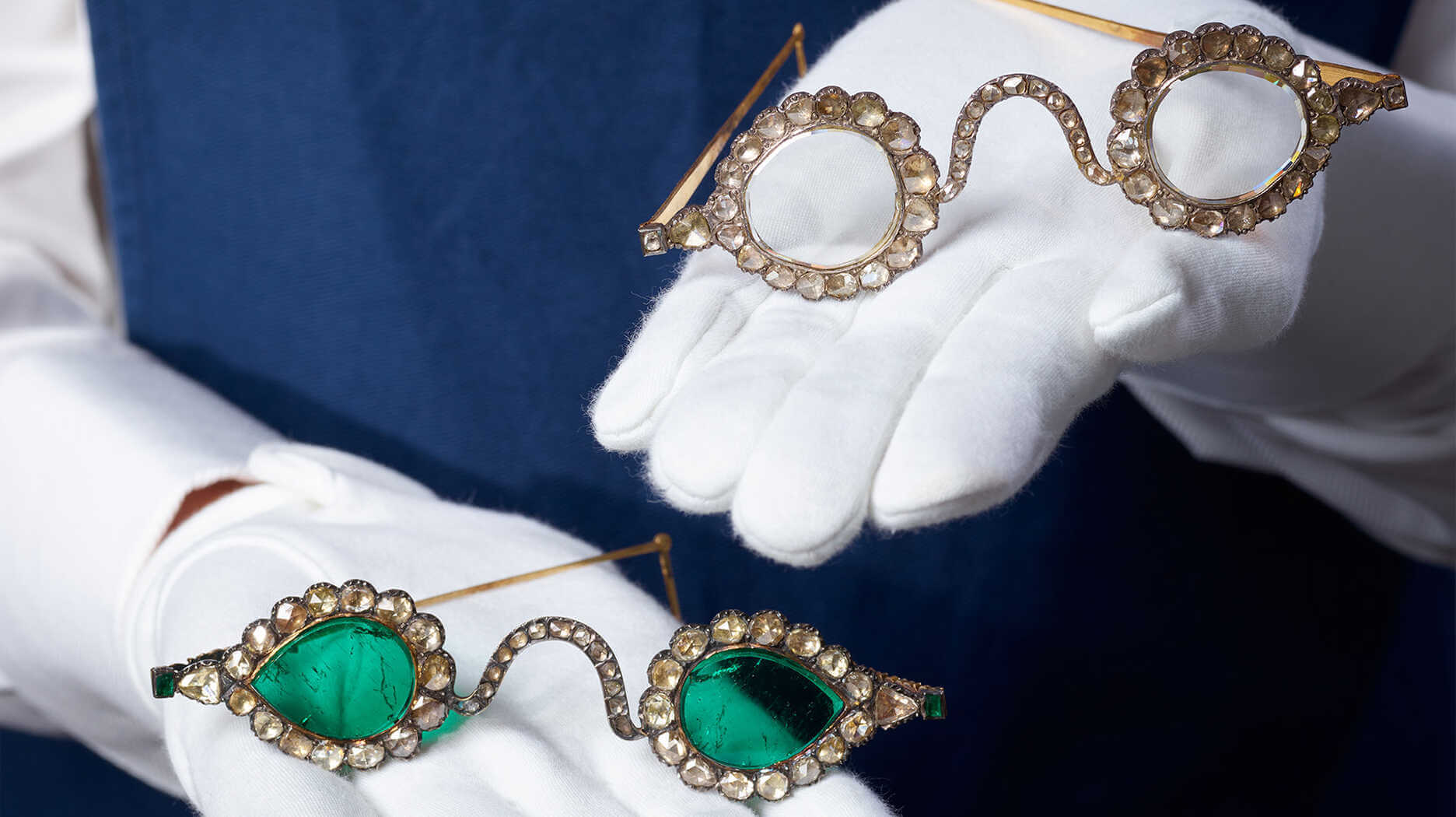
Here is another one of the jeweled oddities that I have found while hunting down tiaras.
The emerald spectacles are known as the Emeralds for Paradise: The Astaneh-Ye Ferdaws emerald spectacles. According to the Sotheby's auction site (link below in the rabbit hole), the name is a "...reference to the Islamic association of the color green with that of paradise, salvation and eternity." The lenses were shaped in the 17th century from an emerald that was probably 300 carats before being cut.
The diamond spectacles are known as the Diamonds for Light: The Halqeh-Ye Nur diamond spectacles. The Sotheby's site says they were named "...this due to the association of diamonds with light and the Muslim symbolism of light with the presence of God." Each lens is flat, flawless and slightly yellow in color. They weigh about 25 carats but the original diamond they were cut from was probably around 200 carats.
The frames for both pair of spectacles were made around 1890. The emerald lenses were set in silver while the diamond ones were set in gold. Both lenses were then outlined with rose-cut diamonds set in pachchikam technique. It is unknown how the lenses were set prior to these frames but the auction site speculates that perhaps they were used in a pince-nez.
These spectacles are one-of-a-kind - nothing else like these are known to exist today. But why make emerald lenses in the first place? In the first century AD, Pliny the Elder wrote in his Natural History "... after straining our eyes by looking at another object, we can restore our vision to normal by gazing at an emerald." So there was historical precedence to using emerald lenses in a medicinal sense. In addition to that, the Mughals believed that emeralds and other precious gems had astrological meanings, which might have played into their use.
I highly suggest you check out the Sotheby's site because they did an extensive write-up on the origins of the diamond and emerald used in the lenses, a technical analysis regarding both the gems themselves and the cutting technique and a lot of history. It's super interesting and one of the most lengthy auction entries I've seen.
Did anyone else get Wizard of Oz vibes from the emerald lenses?

- A pair of Mughal spectacles set with emerald lenses...
- Emerald eyeglasses, Elvira, and other extraordinary excesses
- Emerald, Diamond Spectacles Fail to Find a Buyer at Auction
- Pachchikam Jewelry
When I first started using Zonelets I had Disqus set up as a commenting system but it looked obnoxiously ugly and I ditched it. Some people are happy to not have blog interaction but I'd love to hear from you if you have any thoughts you want to share! You can respond through my guestbook or email. If you found this link on Discord or the 32-Bit Cafe Discourse, you can message me there or leave a message on my Neocities profile page.