Micromosaic Bugs (and Dove) Tiara
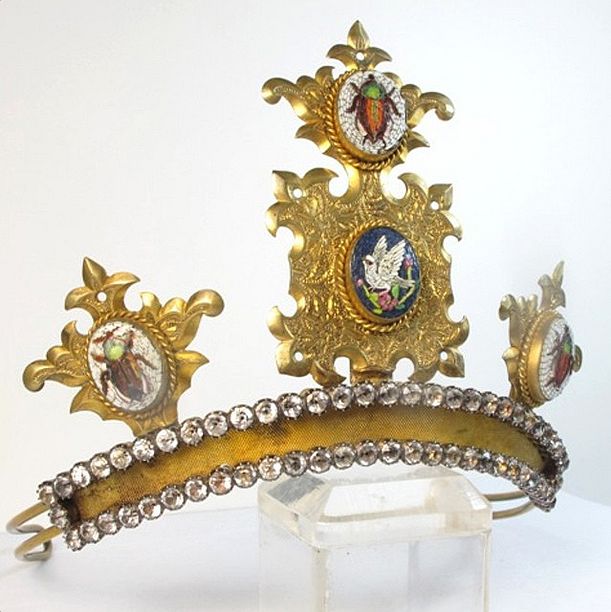
This is another one of those elusive tiaras that don't have a whole lot of Internet presence. There are a few pictures on Pinterest but, other than this auction site listing, I don't see it anywhere else. I wish I could find it elsewhere because the auction house photos are subpar. Lots of shadows and they're tiny! The photo at the top of the page is from Pinterest. It's different from the auction house photos but there's no information on where it came from. Being a tiara detective can be so frustrating!
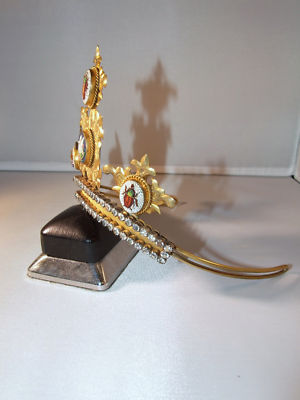
Side view of the tiara | source
Our elusive tiara friend here hails from around 1820 which is the Regency portion of the Georgian period. During this time archaeological styles and micromosaic jewelry were hot.
The tiara is made out of pinchbeck, a golden copper-zinc alloy meant to mimic the look of gold. One source I read (look in the rabbit hole) said it was created specifically to combat the problem of being relieved of your jewelry by highwaymen. You could wear it while travelling and if you were held up at some point during the trip, well, they thought they were getting gold and you were smug in the knowledge that your real gold pieces were safe at home. And, if you were rocking pinchbeck, you wouldn't put your real jewels on it so those clear gems on the band are black dot paste (a black dot painted on the back of the paste gem gave the illusion of depth).
Check out those micromosaics! There are 3 scarab beetles and a random dove. The scarab beetle has been used to symbolize protection, power, life/death/rebirth and good fortune. When I think of what a dove symbolizes, my first thought is peace and then maybe love. But, in ancient Mesopotamia they were associated with Inanna-Ishtar, who was not only the goddess of love but also of sexuality and war. Ooo, doves with depth! And, in ancient Greece, doves were sacred to Aphrodite.
I don't know if the creator of this tiara was trying to express anything in particular through symbolism. Maybe someone came back from a Grand Tour with a handful of random mosaics and told a jeweler to make something with them. Who knows?

- Pinchbeck: What It Is, How to Identify It & What It's Worth
- How to Identify Genuine Georgian Jewelry, part 1- explains about settings, stones, materials, marks and what red flags to look out for when evaluating potential Georgian jewelry.
- Georgian Jewelry: 1714-1837 - A little bit of Georgian history, including that of fashion and jewelry.
- Guide to Georgian Jewellery (1714–1837) - This article has a nice chart splitting up the different eras within the Georgian period and giving details on key features, cuts and materials of jewelry made in those periods.
- Souvenirs of the Grand Tour - Short post from a jewelry historian explaining what the Grand Tour was, how jewelry figured into it and a brief description of how micromosaics are made.
- History of Scarab Jewelry
- Doves as symbols - In addition to mainly being aspects of peace and love, the dove was also the familiar of Hachiman, a Japanese divinity of war and archery. WAR DOVES!
When I first started using Zonelets I had Disqus set up as a commenting system but it looked obnoxiously ugly and I ditched it. Some people are happy to not have blog interaction but I'd love to hear from you if you have any thoughts you want to share! You can respond through my guestbook or email. If you found this link on Discord or the 32-Bit Cafe Discourse, you can message me there or leave a message on my Neocities profile page.