Conch Shell Tiara
© The Trustees of the British Museum source
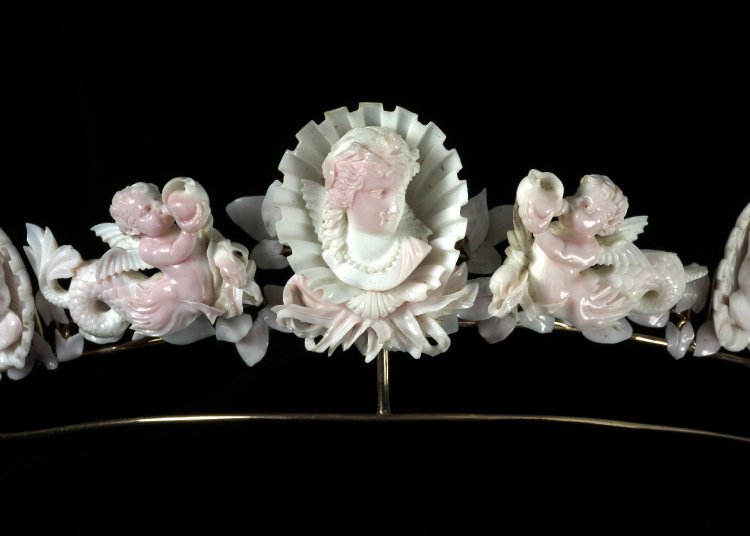
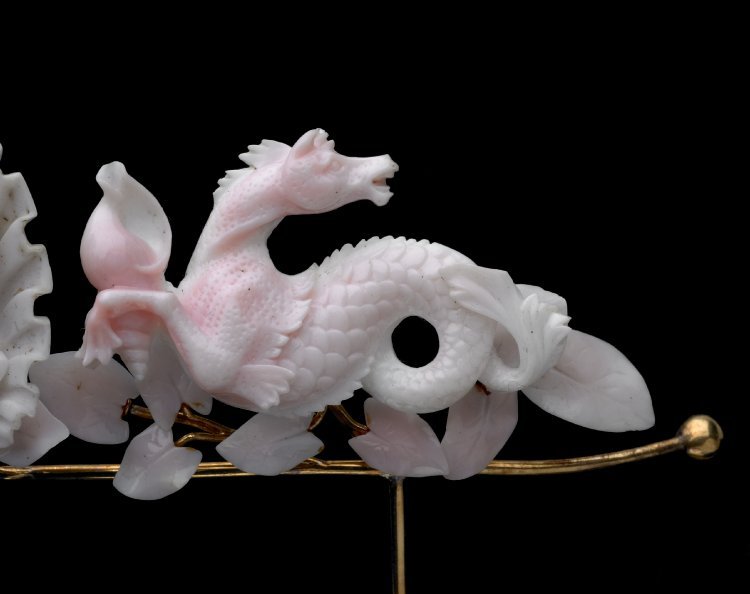
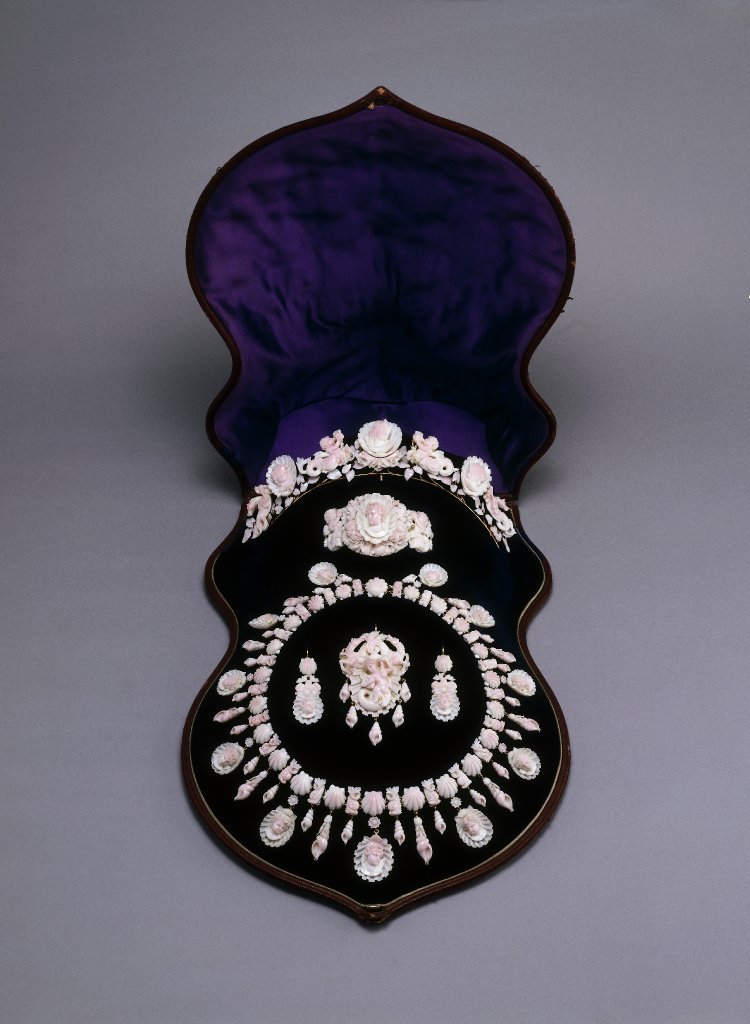
This lovely tiara is part of the Conch Shell parure at the British Museum. It was made around 1850-1870 in Naples and the whole set is carved with marine motifs including dolphins, seahorses, mermaids and scallop shells. The curator notes on the British Museum site are better than anything I can paraphrase so I'm just going to quote from the description. I think after reading the notes you can get a real appreciation for the technical skill required to create this.
Technically, this is a tour de force: each piece in this set is made up of multiple elements, cut from thin sections to achieve an almost translucent effect and then riveted to a gold framework, invisible from the front. Much of the work is undercut or hollowed out with remarkable delicacy. The giant, or Queen, conch shell (Strombus gigas) was imported from the West Indies and occurs as distinct pink and white layers. Because the layers are relatively thin, and the strong colour occurs mainly on the lip of the shell, multiple pieces were often built up to create a high relief cameo effect.
© The Trustees of the British Museum source
The parure is not marked, but there is no doubt that it was carved and mounted in Naples, the centre of the shell and coral carving industry. Shell work was widely exported to England. If not acquired on a visit to Italy, the parure may have been purchased from one of the importers of Neapolitan jewellery in London such as the Bond Street firm of Robert Phillips, who exhibited work from Naples at the London International Exhibition of 1862.
© The Trustees of the British Museum source
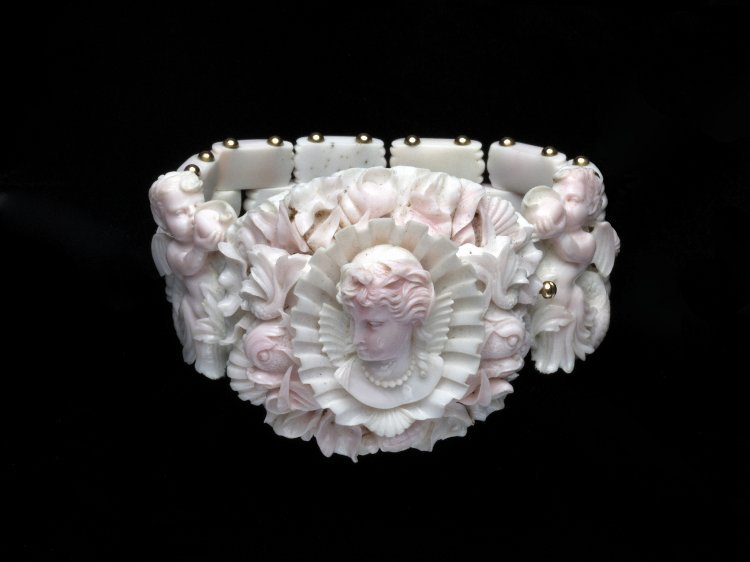
One last picture for you all - it's not the tiara but the bracelet of the parure but it does let you get another close look at the gorgeous carving.
© The Trustees of the British Museum source

- Marine Invertebrates of Bahama - Queen Conch (Strombus gigas)
- Queen Conch: Pretty Is as Pretty Does
- Google Arts and Culture: 'Parure', consisting of tiara, necklace, pendant, earrings and bracelet
When I first started using Zonelets I had Disqus set up as a commenting system but it looked obnoxiously ugly and I ditched it. Some people are happy to not have blog interaction but I'd love to hear from you if you have any thoughts you want to share! You can respond through my guestbook or email. If you found this link on Discord or the 32-Bit Cafe Discourse, you can message me there or leave a message on my Neocities profile page.